
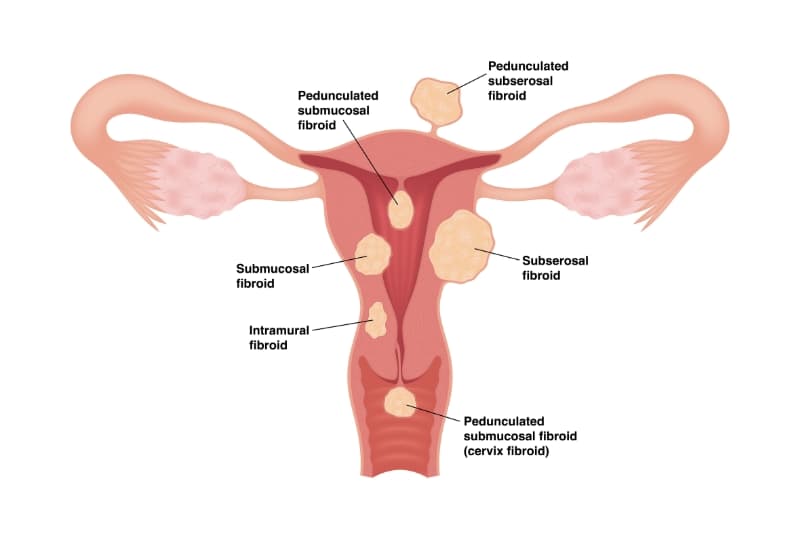
Fibroids can cause heavy periods, anemia, pelvic pressure, frequent urination, abdominal fullness, and pain. Uterine fibroid embolization, or UFE, treats fibroids through their blood supply while preserving the uterus. UFE is one of several treatments for symptomatic fibroids. The right choice depends on symptoms, imaging, age, health history, pregnancy goals, and personal priorities.
What are uterine fibroids?
Fibroids are noncancerous growths made of uterine muscle. Some cause no problems. Others may contribute to:
- Heavy or prolonged menstrual bleeding
- Anemia and fatigue from blood loss
- Pelvic pressure, fullness, or pain
- Abdominal enlargement or bloating
- Frequent urination or constipation
- Pain during sex or lower-back pain
Bleeding and pelvic pain can have other causes. Evaluation should confirm that fibroids are likely to explain the symptoms.
How UFE works
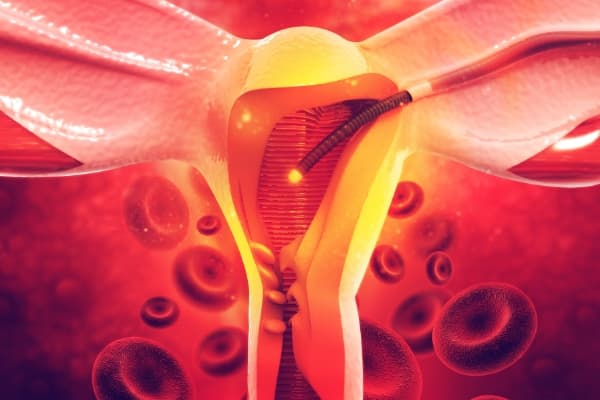
An interventional radiologist guides a small catheter through an artery at the wrist or groin to the uterine arteries. Tiny particles are delivered into branches that feed the fibroids. The treated fibroids lose blood flow and usually shrink over time. UFE does not surgically remove each fibroid. The amount of shrinkage and symptom improvement varies, and follow-up imaging may be recommended.
Who may be considered?
UFE may be considered when fibroid-related bleeding, pressure, or pain affects daily life and the patient wants to compare a catheter-based, uterus-preserving treatment with medication or surgery. Evaluation often includes:
- A gynecologic history and examination
- Review of bleeding, anemia, pressure, pain, and pregnancy goals
- Pelvic ultrasound and often MRI
- Blood testing and pregnancy testing when appropriate
- Review of medications, allergies, kidney function, and infection risk
Patients who hope to become pregnant need an individualized discussion with gynecology and interventional radiology. Pregnancy is possible after either UFE or myomectomy. Both treatments can affect a future pregnancy, and neither guarantees fertility. Age, fibroid number and location, ovarian reserve, prior surgery, and pregnancy history all influence the decision.
The outpatient procedure and recovery
UFE is an outpatient procedure. It is generally performed with local anesthesia and moderate sedation when clinically appropriate. The catheter is removed after embolization, and the access site is covered with a small dressing. Patients go home after monitored recovery. Cramping is often strongest during the first 24 to 48 hours. Fatigue, nausea, reduced appetite, and a low-grade fever can occur during the first several days. These symptoms are commonly called post-embolization syndrome. Recovery time varies, and each patient receives a plan for pain and nausea control, hydration, activity, bleeding or discharge, and warning signs.
Benefits, limits, and risks
UFE treats many fibroids at the same time, preserves the uterus, and generally allows a faster return to normal activity than hysterectomy or abdominal myomectomy. It does not require an abdominal incision.
Most patients are considering UFE because of its uterus-preserving, outpatient approach. Some have only partial relief or later need another treatment. Periods may change, and ovarian function can be affected, especially as a patient approaches menopause. Possible complications include bleeding or injury at the access site, infection, contrast reaction, and kidney injury. Other risks include unintended embolization, passage of fibroid tissue, and injury to the uterus or nearby structures. Severe infection is uncommon but may require urgent surgery.
What the evidence means for patients
Clinical trials show that both UFE and myomectomy can substantially improve fibroid symptoms and quality of life.
This was statistically significant, but both groups improved greatly and the difference was considered small to moderate. Bleeding scores were similar.
UFE does not close the door to future care. A repeat embolization, myomectomy, hysterectomy, or another treatment can still be considered later when appropriate.
Fertility was not the main outcome the trial was designed to answer.
Comparing treatment options
Options may include observation, medication, hormonal treatment, myomectomy, hysterectomy, and selected other procedures. Myomectomy removes fibroids while keeping the uterus. Hysterectomy removes the uterus and is definitive for uterine fibroids. The best fit depends on the diagnosis and the patient’s goals.
When symptoms are urgent
Very heavy bleeding with dizziness, fainting, chest pain, or shortness of breath can be an emergency; call 911. After UFE, fever with worsening pelvic pain or foul-smelling discharge requires prompt contact with the treating team.
Patient Q&A
Does UFE remove the uterus?
No. UFE treats fibroids through their blood supply and leaves the uterus in place.
Can UFE treat more than one fibroid?
Yes. Because the uterine arteries supply multiple fibroids, UFE can treat many fibroids during one procedure. Imaging is still needed to decide whether the overall pattern is suitable.
Can I become pregnant after UFE?
Yes, pregnancy can occur after UFE. Pregnancy also carries considerations after myomectomy. The safest recommendation depends on the patient’s age, fibroid pattern, ovarian reserve, prior treatment, and pregnancy goals.
How long does recovery take?
The strongest cramping is often during the first one to two days. Fatigue and milder symptoms may last longer. Return to work and exercise depends on the person and the type of work.
Can fibroid symptoms return?
Yes. If symptoms continue or return, options can include another embolization session, medication, myomectomy, hysterectomy, or another appropriate treatment. Having UFE does not prevent those later choices.
Sources
- American College of Obstetricians and Gynecologists: Uterine Artery Embolization (opens in a new tab)
- FEMME randomized trial: UFE compared with myomectomy (opens in a new tab)
- FEMME pregnancy and bleeding outcomes (opens in a new tab)
- EMMY trial: ten-year outcomes after UFE or hysterectomy (opens in a new tab)