
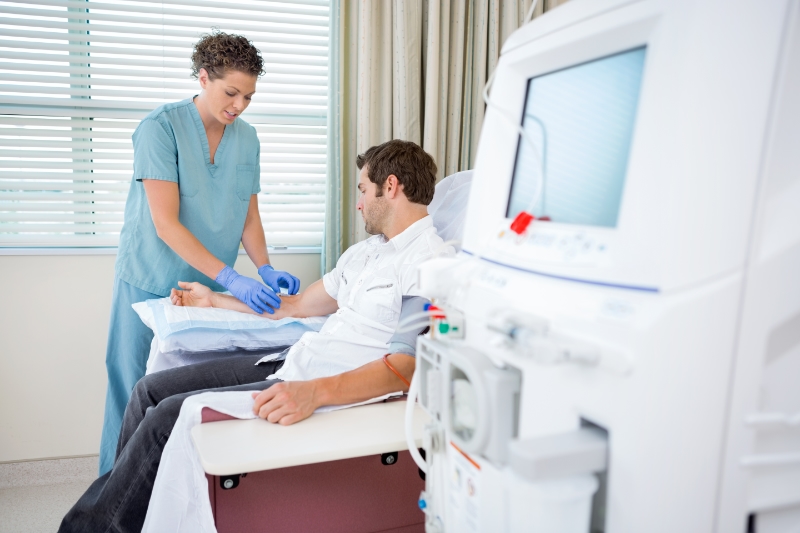
An arteriovenous fistula, or AV fistula, connects an artery to a vein so the vein can develop enough flow for hemodialysis. In selected patients, this connection can be created through small needle punctures instead of a surgical incision. Percutaneous AV fistula creation is also called endovascular AV fistula creation, or endoAVF. It is anatomy-dependent and is not the right approach for every patient.
Planning starts with the patient’s dialysis life-plan
The best access depends on when dialysis may begin and how long it may be needed. Vessel anatomy, prior access history, transplant plans, heart function, and future access sites also matter. The decision should be coordinated with nephrology, the dialysis team, and surgical or endovascular access specialists. Percutaneous and surgical fistulas are options within the same long-term plan, not competing treatments for every patient.
Who may qualify?
Eligibility requires ultrasound mapping that shows an artery and vein of suitable size, distance, and location. The expected pathway to a vein that can be reached safely with dialysis needles must also be assessed. Prior central-vein blockage, very small vessels, unfavorable anatomy, active infection, some clotting problems, or other medical factors may make endoAVF unsuitable.
How the fistula is created
One or more small catheters are guided into nearby vessels in the arm using ultrasound and X-ray imaging. Energy is delivered to create a controlled connection between the artery and vein. Depending on the system and anatomy, additional steps may be needed to direct enough blood into the target vein. The fistula is not usually ready for dialysis immediately. It must mature, meaning that the vein grows and develops enough flow for reliable needle access.
The outpatient procedure and recovery
Provectus performs percutaneous AV fistula creation as an outpatient procedure, generally with local anesthesia and moderate sedation when clinically appropriate. Patients go home after monitored recovery with instructions about the puncture sites, arm activity, medications, and warning signs. Bruising, soreness, or mild swelling can occur. The access team checks the fistula with examination and ultrasound as it matures.
Maturation and follow-up procedures
Some fistulas mature without major assistance. Others need balloon angioplasty, treatment of side branches, or another procedure before they can be used. Procedures that assist maturation are common with dialysis access, including endoAVF. The likelihood depends on the device, anatomy, and definition of maturation. The dialysis team decides when and how needle use should begin. A new endoAVF should not be used only because it has been created.
How endoAVF compares with surgical creation
EndoAVF avoids a surgical incision and may reduce wound and infection problems.
However, 12-month primary patency favored surgical fistulas, while the rate of keeping the access usable with additional treatment was similar. Other studies and devices have produced different patency results. The evidence therefore supports endoAVF as a useful option for selected anatomy, but it does not prove that every endoAVF matures faster, lasts longer, needs fewer total procedures, or develops fewer aneurysms than every surgical fistula.
Benefits, limits, and risks
For suitable anatomy, endoAVF avoids a surgical incision and may preserve other access options. It does not guarantee successful maturation or freedom from future maintenance. Possible complications include bleeding, bruising, infection, and injury to an artery or vein. The fistula may narrow, clot, or fail to mature. Other risks include reduced blood flow to the hand, arm swelling, nerve symptoms, heart strain, contrast reaction, or the need for another procedure.
When symptoms are urgent
Severe hand pain, a cold or pale hand, new weakness or numbness, rapidly increasing swelling, uncontrolled bleeding, fever, or drainage needs urgent evaluation.
Patient Q&A
How is endoAVF different from surgical fistula creation?
EndoAVF creates the artery-vein connection through needle punctures using imaging and a catheter-based device. Surgical creation uses an incision. Anatomy and the long-term access plan determine which approach fits.
Will the fistula be ready for dialysis right away?
Usually not. It must develop enough flow and a usable vein pathway. Ultrasound and clinical checks guide the timing.
Will I need another procedure?
Possibly. Additional procedures to help maturation or maintain flow are common with dialysis access, including endoAVF.
Does endoAVF mature faster or last longer than a surgical fistula?
It may meet early maturation criteria sooner in some patients, and it avoids a surgical wound. Patency and the need for additional procedures vary by anatomy, device, and study. EndoAVF should not be presented as universally faster-maturing or more durable than surgical creation.
Is percutaneous fistula creation FDA authorized?
Yes. The FDA authorized the first catheter-based systems for creating AV fistulas in 2018. Eligibility still depends on the device instructions and the patient’s anatomy.
Does endoAVF eliminate the need for maintenance?
No. Like a surgical fistula, it can narrow, clot, or fail to mature and may need treatment.