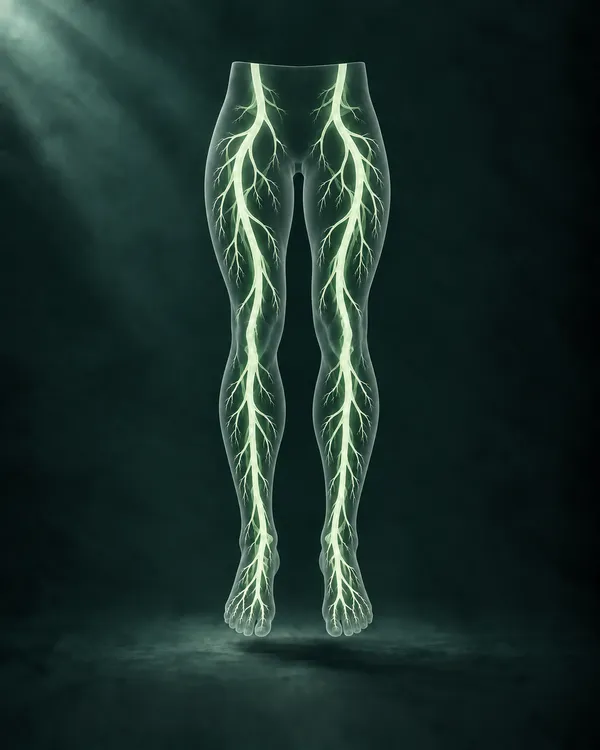
Peripheral artery disease, or PAD, develops when narrowed or blocked arteries reduce blood flow to the legs and feet. It may cause pain with walking, pain in the foot at rest, or a wound that will not heal. PAD is also a warning sign of higher heart and stroke risk. Good care addresses the whole patient—not only the blockage seen on a scan.
Symptoms of PAD
Symptoms may include:
- Calf, thigh, or buttock aching or cramping with walking that improves with rest
- A shorter walking distance or slower pace
- Foot or toe pain at rest, especially when lying down
- A slow-healing wound on the foot or toes
- A cold, pale, or discolored foot
Some people have PAD without classic symptoms. Others reduce activity so much that walking pain is not obvious.
Artery disease is not vein disease
Arteries carry oxygen-rich blood to the legs. PAD reduces that inflow. Veins return blood to the heart; leaky vein valves or blocked veins more often cause swelling, heaviness, skin changes, or venous ulcers. Nerve, joint, and spine problems can also cause leg pain.
How PAD is evaluated
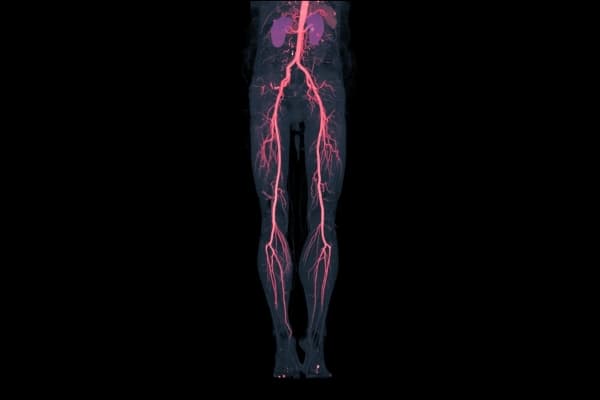
Evaluation may include an examination of the legs and feet, an ankle-brachial index, toe pressures, arterial ultrasound, exercise testing, CT or MR angiography, or catheter angiography. The team also reviews smoking, diabetes, blood pressure, cholesterol, kidney disease, medications, heart history, walking ability, and wound care.
Treatment begins with cardiovascular and foot care
Treatment may include smoking cessation, cholesterol-lowering therapy, antiplatelet or other medication when appropriate, blood-pressure and diabetes control, structured walking exercise, and careful foot care. These measures remain important even when a procedure restores blood flow.
When a minimally invasive procedure may help
A procedure to restore blood flow may be considered when walking remains limited despite appropriate medical and exercise therapy. It may also be needed when poor blood flow causes rest pain, a wound that will not heal, or tissue loss. Through a small arterial access site, an interventional radiologist may use balloon angioplasty, atherectomy, a stent, clot-removal techniques, or a combination. No single device is right for every blockage. Some patients are better served by bypass surgery or medical care without a procedure.
The outpatient procedure and recovery
Provectus performs outpatient PAD procedures, generally with local anesthesia and moderate sedation when clinically appropriate. Patients are monitored and go home after recovery with instructions about the access site, activity, medications, foot care, and follow-up. Bruising or soreness at the access site can occur. The expected recovery depends on the arteries treated, the technique used, and the patient’s overall health.
Benefits, limits, and risks
Restoring blood flow may improve walking or help a wound heal when the symptoms and anatomy fit.
Bypass may offer a more durable result for some extensive blockages. The choice depends on anatomy, symptoms, health, and future treatment options. Neither approach cures atherosclerosis, and a treated artery or bypass graft can narrow again. Medical therapy, exercise when safe, and foot care remain essential after either treatment. Possible complications include bleeding, artery injury, clot or debris traveling downstream, worsening circulation, contrast reaction, kidney injury, infection, or the need for urgent surgery. In advanced disease, limb loss may still occur despite treatment.
When PAD symptoms are urgent
Sudden severe limb pain, a cold or pale foot, new numbness or weakness, or loss of movement can mean a limb-threatening emergency. Call 911 or go to an emergency department. Rapidly worsening wounds, spreading infection, or gangrene also need urgent care.
Patient Q&A
Is “poor circulation” always PAD?
No. Vein, nerve, joint, and spine problems can cause similar symptoms. PAD specifically means reduced arterial blood flow.
Does every person with PAD need a procedure?
No. Medication, exercise, smoking cessation, and risk-factor control are central to treatment. A procedure is considered when symptoms and anatomy justify it.
What tests are used for PAD?
Common tests include an ankle-brachial index, toe pressure, and arterial ultrasound. More detailed imaging may be needed when a procedure is being considered.
Can a treated artery narrow again?
Yes. Follow-up and long-term cardiovascular care remain important after treatment.
When should a vascular surgeon participate?
A vascular surgeon may be needed when bypass or another surgical option may provide a better or more durable result.