

Knee osteoarthritis can make walking, stairs, sleep, work, and exercise difficult. Genicular artery embolization, or GAE, is a minimally invasive treatment intended to reduce pain linked to abnormal blood flow and inflammation around an arthritic knee. GAE does not rebuild cartilage or cure arthritis. It may be considered for selected patients whose pain continues despite appropriate nonsurgical care.
Understanding knee osteoarthritis
Osteoarthritis involves changes in cartilage, bone, joint lining, and surrounding tissues. Symptoms may include pain with activity, stiffness after rest, swelling, reduced motion, or a grinding sensation. Knee pain can also come from a meniscus injury, tendon problem, nerve pain, inflammatory arthritis, infection, or referred pain from the hip or spine. The diagnosis and source of pain should be reviewed before GAE is considered.
How GAE works
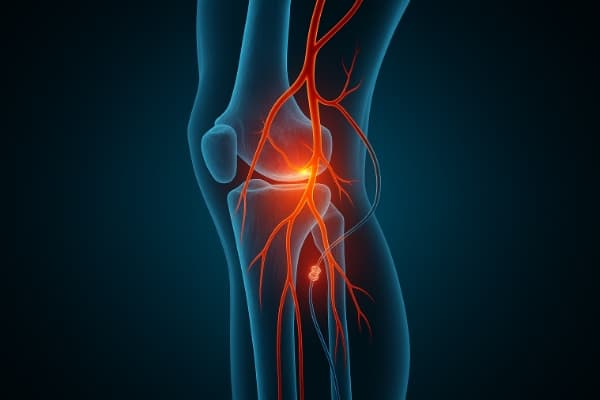
An interventional radiologist guides a small catheter into arteries around the knee. Angiography is used to look for areas of increased blood flow that may be linked to inflamed joint tissue. Tiny particles are delivered into selected abnormal vessels while preserving the main blood supply to the leg. The goal is pain reduction and improved function. GAE does not correct joint deformity and does not prevent every patient from eventually needing knee replacement.
Who may be considered?
GAE may be discussed when:
- Imaging and symptoms support knee osteoarthritis as the main pain source
- Pain continues despite a reasonable course of exercise, physical therapy, medication, or injections
- Symptoms meaningfully limit daily activity
- The patient is not ready for, does not qualify for, or wants to compare other options with knee replacement
Evaluation includes symptom history, examination, knee imaging, medication review, and assessment of leg circulation. Infection, severe skin problems near the knee, some patterns of advanced joint damage, and poor arterial access may make GAE inappropriate.
The outpatient procedure and recovery
GAE is performed through a small arterial access site, usually near the groin or ankle. Provectus performs it as an outpatient procedure, generally with local anesthesia and moderate sedation when clinically appropriate. Patients are monitored after treatment and go home after recovery. Temporary bruising, soreness, swelling, or skin discoloration near the knee or access site can occur. Activity instructions are individualized, but the procedure does not replace physical therapy, exercise, weight management, or ongoing arthritis care.
Benefits, limits, and risks
GAE avoids a joint incision and does not remove or replace the knee.
The evidence is still developing, and results across studies are mixed. Patient selection, arthritis severity, pain source, and technique may affect results. GAE is best presented as an option for carefully selected patients whose pain continues despite appropriate nonsurgical care. Possible complications include bleeding or injury at the access site, contrast reaction, and kidney injury. Skin discoloration, skin injury, numbness, unintended embolization, or damage to nearby tissue can also occur. Serious complications appear uncommon in published studies but remain possible. Having GAE does not prevent later injections, nerve treatment, or knee-replacement surgery if another option becomes appropriate.
Comparing treatment options
Options may include activity changes, physical therapy, weight management, topical or oral medication, braces, injections, nerve procedures, or knee replacement.
When knee symptoms are urgent
A hot, very swollen knee with fever, sudden inability to bear weight, or major injury needs urgent evaluation.
Patient Q&A
What kind of knee pain is GAE designed to treat?
GAE is designed for pain linked to knee osteoarthritis and inflammation, not every cause of knee pain. Imaging and examination help determine whether the pain pattern fits.
Does GAE regrow cartilage?
No. The goal is to reduce pain and improve function. It does not reverse the structural changes of arthritis.
How soon might I notice improvement?
Some patients improve within weeks, while others take longer or do not improve. A consultation should include realistic expectations and a follow-up plan.
Can I still have knee replacement later?
GAE is not intended to block later orthopedic treatment. Future decisions depend on symptoms, joint damage, health, and an orthopedic evaluation.
How strong is the evidence for GAE?
Evidence is growing but remains mixed. A consultation should focus on whether the patient’s pain pattern and imaging match the patients most likely to respond.